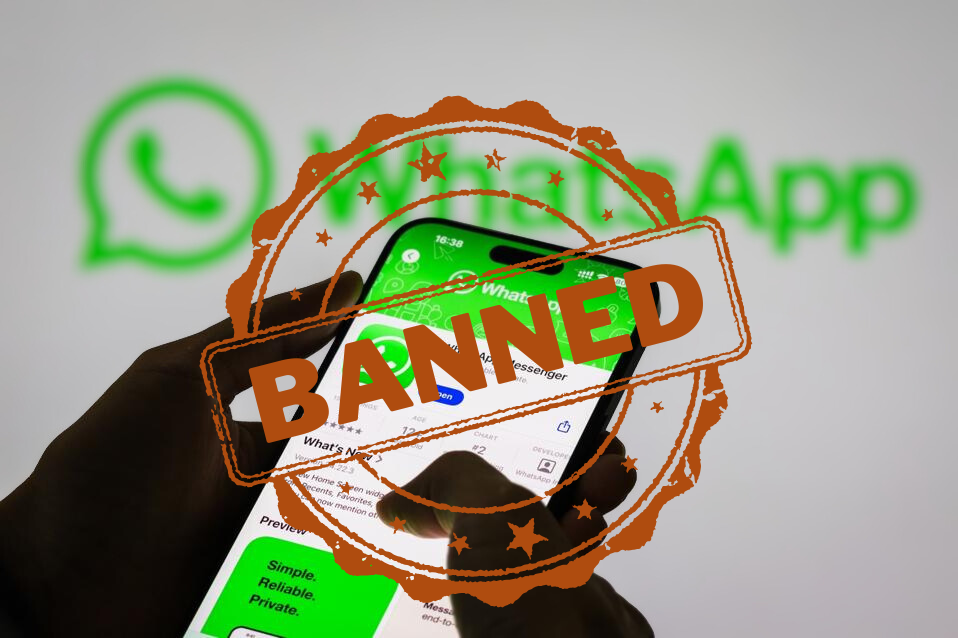
As governments worldwide begin cracking down on encrypted messaging services, speculation is growing that India may soon consider stronger action against WhatsApp. With privacy, misinformation, and compliance concerns mounting, WhatsApp’s future in the country is beginning to look uncertain.
Rising Concerns in India
India is WhatsApp’s largest market, with over 500 million active users. Yet, the platform has frequently come under fire for issues including:
- The spread of fake news and violence-inducing forwards
- Refusal to trace message originators, citing encryption policies
- Delays in complying with the Information Technology (IT) Rules
- Cross-border data storage and jurisdictional limitations
In early 2025 alone, WhatsApp suspended over 31 million Indian accounts for violating its terms of service. This enforcement raised serious questions about the platform’s control over harmful content and the government’s ability to regulate it effectively.
A senior official from the Ministry of Electronics and IT stated, “The balance between user privacy and national security must be reevaluated. If platforms refuse cooperation, we cannot rule out more aggressive policy action.”
International Precedents: A Global Pattern Emerges
United Kingdom
- Under the Online Safety Act 2023, the UK has demanded the ability to scan encrypted messages for harmful content.
- WhatsApp has warned that it may exit the UK if forced to weaken encryption.
- The Scottish Government banned WhatsApp from official use in early 2025, citing a lack of message audit trails during the COVID crisis.
United States
- The U.S. House of Representatives banned WhatsApp from all government devices in June 2025, citing poor transparency and security vulnerabilities.
- Experts expect additional federal agencies to follow suit.
Russia
- Russia is widely expected to ban WhatsApp by September 2025 as it launches its own messaging app, Max.
- Russian regulators have criticized WhatsApp for refusing to comply with domestic surveillance laws.
Will India Follow?
India’s current IT Rules already require:
- Appointment of grievance and compliance officers
- Removal of flagged content within 36 hours
- Technical ability to trace the originator of harmful messages
WhatsApp has legally challenged the traceability requirement, stating that it would undermine end-to-end encryption and compromise user privacy. However, growing public concern about digital misinformation and platform accountability is putting pressure on the Indian government to act.
Tech policy analysts argue that if WhatsApp does not fully comply with Indian regulations, a regional ban or forced exit—similar to what may occur in the UK or Russia—cannot be ruled out.
Impact of a Potential Ban in India
If WhatsApp were to be banned or restricted in India, the effects would be significant:
- Businesses would lose a major communication and customer service tool
- Professionals and students who rely on group chats would be disrupted
- Users may be pushed toward alternative platforms such as Telegram, Signal, or homegrown options like Bharat Messenger
Given WhatsApp’s deep integration into daily life and commerce, even partial restrictions could spark major backlash and affect digital infrastructure.
Conclusion
India has not formally moved to ban WhatsApp, but it is watching the UK, Russia, and the United States closely. With increasing government interest in controlling misinformation and enforcing data compliance, India may be next in line to demand major policy changes—or consider deeper restrictions.
For now, WhatsApp remains available. But its long-term future in India will likely depend on how it responds to both legal challenges and regulatory expectations in the months ahead.